Key takeaways
- Rough or scratchy surfaces mean the finish has worn down.
- Stains that survive brushing and treatment are often in the plaster itself.
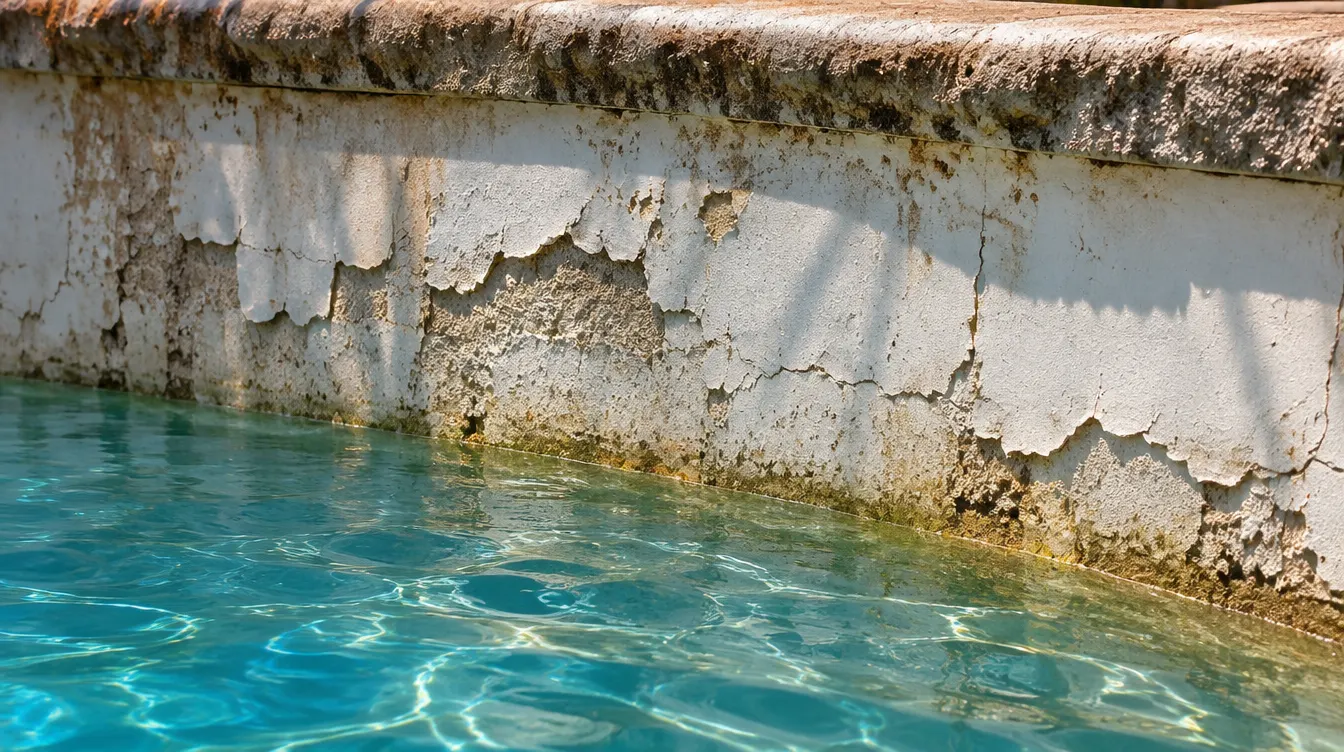
- Flaking, peeling or hollow-sounding spots mean the finish is coming loose.
- Small surface cracks are common, but growing or wide cracks need a closer look.
- Faded, blotchy color is cosmetic but often comes with the other signs.
A concrete pool’s finish wears with time. Sun, chemicals and years of use break it down, and Shreveport’s long summers mean more of all three. Here are the five signs that usually mean it’s time.
1. Rough, scratchy spots
If the floor or steps feel like sandpaper, scrape feet or snag swimsuits, the top layer of the finish has worn away. Rough plaster also gives algae more to cling to, so cleaning gets harder.
2. Stains that won’t come out
Some stains come from leaves, metals in the water or rust. If brushing and the right chemical treatment don’t remove them, the stain is likely in the plaster itself.
3. Flaking, peeling or hollow spots
When patches of finish flake off, or a spot sounds hollow when tapped, the surface is separating from the shell underneath. It tends to spread.
4. Cracks
Fine surface cracks in plaster, sometimes called crazing, are common and often cosmetic. Wider cracks, cracks that grow or cracks paired with water loss need a closer look. On clay soil that shifts with the seasons, a contractor should check whether the shell has moved. If water loss is involved, start with pool repair and leak detection.
5. Faded or blotchy color
Fading on its own is cosmetic. It usually shows up alongside the other signs, though, and it’s the one most homeowners notice first.
What to do next
If you’re seeing two or more of these, resurfacing is likely worth pricing out. A contractor can check the shell, test for leaks and recommend a finish. Read more about pool resurfacing, or request a free quote.
Frequently asked questions
How often does a pool need resurfacing?
It varies with the finish, water chemistry and use. Plaster wears soonest and pebble finishes usually last longest. Consistent water balance stretches the life of any finish.
Can I just patch the bad spots?
Small areas can sometimes be patched, but patches rarely match and the surrounding finish usually isn't far behind. If several signs show up at once, resurfacing is the longer-lasting fix.
Does resurfacing fix leaks?
It can fix small surface cracks, but leaks in plumbing, fittings or the shell need to be found and repaired first. A leak test before resurfacing is a good idea.